
Volunteer Programs in Kenya
Volunteer in Kenya in Nakuru and choose from teaching, childcare, environmental conservation, women empowerment, construction and wildlife conservation. You’ll receive an orientation when you arrive.
You arrive at Nairobi international airport of Jomo Kenyatta International Airport (NBO), where you will be picked up from.

Our Partner The Green Lion
We work closely with our long-term partner The Green Lion, one of the world's largest, established and trusted operators of volunteer travel.
The Green Lion operates programmes across 45+ countries, 100+ locations and 300+ programmes, covering Asia, Africa, Latin America, Europe and Oceania.
Green Lion's model is important to understand.
They work with sending organisations such as agencies and manage the actual programme delivery on the ground. Their local teams handle programme operations, accommodation, coordinators, participant support and other in-country services.
That's where we come in.
We help you understand the choices available, identify the programs that fit your plans and arrange your experience.
A Relationship Built Over Many Years
Our founder has worked with The Green Lion for more than 15 years. That long-standing relationship gives us something that is difficult to create overnight.
- We know the organisation.
- We know how the programs work.
- And, we know the people behind them.
We work closely with The Green Lion because we believe their approach gives us the combination we want to offer our travellers:
- Quality programmes.
- Experienced local teams.
- A broad international network.
- Meaningful community experiences.
- And genuine choice.
With access to a network covering 45+ countries and 100+ locations, we can look beyond a single destination when helping you plan your trip.
Meet your local coordinator in Kenya.

Our Projects in Kenya
Volunteer in Nakuru and choose a program based on the type of work you want to do. The local partner offers placements in teaching, childcare, environmental conservation, women empowerment, construction and renovation, and wildlife conservation.
The programs are different in both the type of work and the environment you’ll be working in. Some are school or communitybased, while the conservation programs involve outdoor work and activities such as tree planting, forest work, wildlife monitoring and hiking.
The Kenya programs
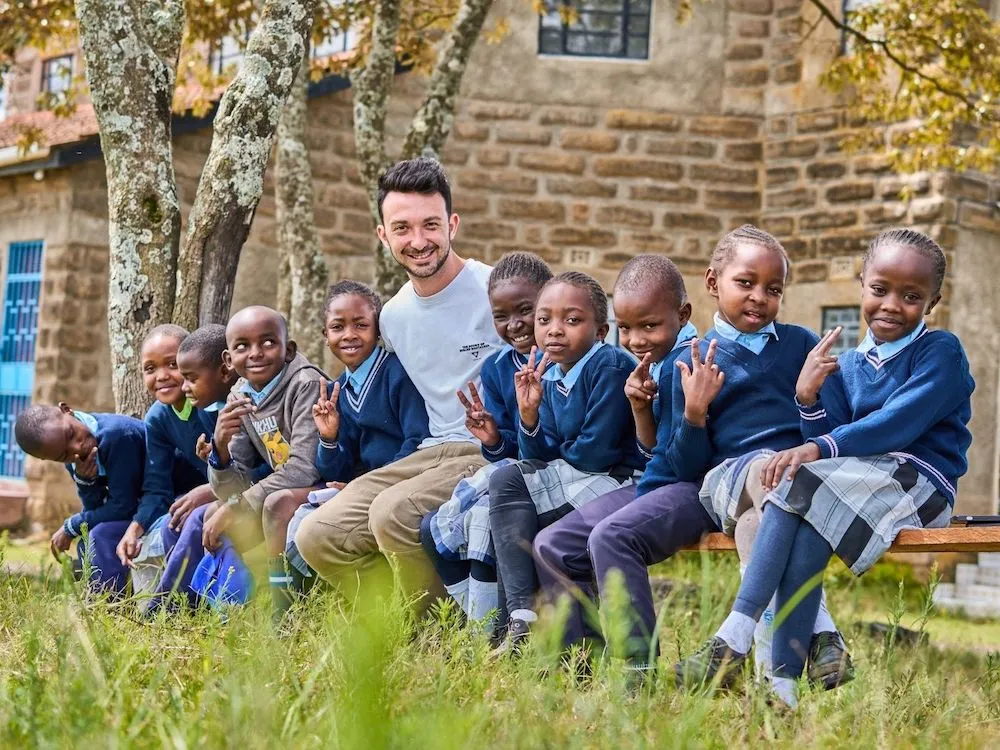
- Teaching — assist local teachers with English lessons, academic activities, games and creative activities.
- Childcare — work with children aged 6 months to 6 years in daycare and preschool settings.
- Environmental Conservation — support reforestation, tree nurseries, environmental education and other local conservation activities.
- Women Empowerment — work alongside a local Community-Based Organization supporting women’s groups through workshops and skills development.
- Construction & Renovation — assist with practical construction, renovation, painting, plastering and related community projects.
- Wildlife Conservation (minimum 2 weeks) — take part in wildlife monitoring, habitat restoration, tree planting and conservation activities.
Teaching in Kenya
Support local teachers in schools and Child Development Centers in rural Nakuru by helping with English, academic activities and creative lessons. You’ll work alongside local staff and spend time with children through lessons, games, storytelling, music and arts and crafts.
What you’ll do
The focus is on supporting the existing teachers rather than taking over their role. Your activities can include:
- Helping with English lessons and other academic subjects
- Preparing simple, engaging lessons and activities
- Supporting classroom activities and assessments
- Using songs, storytelling, games and arts and crafts
- Helping with basic hygiene routines such as handwashing
- Taking part in wider school activities
- Running English and sports activities during school holidays
The exact activities can vary depending on the school, the children and local conditions.
Highlights
- Work alongside local teachers
- Help children practise English and build confidence
- Use creative activities to support classroom learning
- Take part in school routines beyond formal lessons
- Get practical experience in a local education setting
- Join day-camp style activities during school vacations
- Receive guidance from local coordinators and access to 24-hour support
Who is it suited to?
This program is a good fit if you enjoy working with children and are comfortable being active in a school environment. You should be patient, respectful and willing to adapt to the way the local school operates.
You do not need to treat the placement as your own classroom. Your role is to support the local teachers and contribute where they need an extra hand.
Working with the local teachers
You’ll work alongside local teachers rather than independently. They remain responsible for the school environment and teaching, while you contribute additional activities, ideas and support.
This also means you’ll need to follow their guidance, the local dress code and the routines of the school.
A typical week
Monday to Friday
Morning
Breakfast, followed by time at the local school assisting with lessons and activities.
Midday
Lunch break.
Afternoon
Return to the school to continue supporting teachers and students through lessons, games or creative activities.
Late afternoon
Return to the accommodation and prepare activities or lessons for the following day.
Evening
Dinner and free time to relax, meet other participants or explore the local area.
The schedule can change because of weather, local conditions or unforeseen circumstances.
Good to know
The program is about supporting an existing local education setting, not arriving with your own teaching system. Being flexible and working well with the local staff is therefore an important part of the experience.
Childcare in Kenya
Work with young children aged 6 months to 6 years in a daycare or preschool setting in rural Nakuru. You’ll support local teachers through play, English practice, storytelling, crafts and other activities suited to young children.

What you’ll do
Your role is to support the local staff and create activities that help young children learn through play and interaction.
- Help children practise English through songs, games and conversation
- Assist with activities suited to different age groups
- Prepare and lead storytelling, crafts and play-based activities
- Work alongside local teachers
- Help with special events and holiday programs
- Introduce new activity ideas where appropriate
- Build positive relationships with children, teachers and families
Highlights
- Work with children from 6 months to 6 years
- Gain practical experience in an early-childhood setting
- Support English learning through everyday activities
- Work alongside local childcare staff
- Take part in holiday programs and special events
- Experience local childcare and education practices
Who is it suited to?
This program suits people who enjoy spending time with young children and are comfortable with a busy, hands-on environment.
You should be patient, adaptable and willing to follow the approach of the local teachers. Because the placement includes children of different ages, the activities and responsibilities can vary depending on where you are placed.
Working with local staff
You’ll work closely with local teachers rather than operating independently. They provide the local context and guidance, while you contribute additional activities, energy and ideas.
A typical week
Monday to Friday
Morning
Breakfast followed by around 2–3 hours assisting local staff with lessons and activities.
Midday
Lunch and a break.
Afternoon
Another 2–3 hours working with the children through activities such as storytelling, crafts and play.
Evening
Free time, with some preparation of activities and materials for the following day.
The schedule can change because of weather, local conditions or unforeseen circumstances.
Good to know
The placement covers a wide age range, from babies and toddlers through to preschool children. Your daily activities will therefore depend on the age group and the local setting you are working in.
Environmental Conservation in Nakuru
Get involved in local environmental projects focused on reforestation, tree nurseries, sustainable gardening and environmental education. The program combines practical outdoor work with activities designed to involve the local community.

What you’ll do
The work can include:
- Preparing seedlings and working in a local tree nursery
- Planting indigenous trees
- Digging holes and preparing areas for planting
- Collecting leaf specimens during forest activities
- Helping with gardening at a local school
- Supporting environmental education with children
- Promoting awareness of reforestation and recycling
- Creating green walls using reused plastic
- Supporting vertical vegetable gardens
- Taking part in forest walks, hikes and ecological activities
Highlights
- Practical involvement in reforestation
- Work in a local tree nursery
- Tree planting in forest areas
- Environmental education activities
- Sustainable gardening projects
- Outdoor activities in the Nakuru area
- Learn about local ecological challenges
Who is it suited to?
This program is suited to people who prefer practical outdoor work and are interested in environmental issues.
You should be prepared for physical activity, walking and working outdoors for several hours a day.
Working with the local community
The program is carried out with local community members who are involved in environmental restoration. Your role is to provide practical support and participate in activities alongside them.
A typical two-week schedule
Week 1
Monday: Orientation and introduction to the project and accommodation
Tuesday: Tree nursery work and seedbed preparation
Wednesday: Tree nursery work
Thursday: Dundori Forest — leaf specimen collection
Friday: Local school — gardening, tree planting and environmental education
Week 2
Monday: Forest walk and indigenous tree planting
Tuesday: Menengai Crater hike, ecosystem education and tree planting
Wednesday: Dundori Forest hike and tree planting
Thursday: Menengai Crater hike and ecological education
Friday: Impact analysis and debrief
The stated daily commitment is approximately 5–6 hours of hands-on activities.
Good to know
This is an outdoor program. Activities, locations and schedules can change because of weather, local conditions or other unforeseen circumstances.
Women Empowerment in Nakuru
Work alongside a local Community-Based Organization supporting more than 50 women-led self-help groups. Activities focus on practical topics such as financial literacy, digital skills, entrepreneurship, personal development and leadership.

What you’ll do
Your activities can include:
- Leading workshops on financial management
- Supporting digital and technology skills
- Sharing information about entrepreneurship
- Running personal development activities
- Helping with confidence-building exercises
- Sharing knowledge through discussions and cultural exchange
- Introducing sustainable and environmentally conscious practices
- Adapting activities to the needs of the women’s groups
Highlights
- Work with women-led community groups
- Support practical skills development
- Cover topics including finance, technology and entrepreneurship
- Take part in cultural exchange
- Work with a local Community-Based Organization
- Visit women’s groups in different villages
- Develop workshops and interactive activities
Who is it suited to?
This program is best suited to volunteers who are comfortable communicating with adults, leading discussions and sharing practical knowledge.
You should be willing to listen as well as teach. The program is based on interaction with local women and community organizations, rather than simply delivering prepared presentations.
Working with the local organization
You’ll work alongside a local Community-Based Organization and visit women’s groups in villages around the Nakuru area. The local organization provides the community connection and helps shape the activities.
A typical week
Monday to Friday
The program involves approximately 4–6 hours per day of workshops and community activities.
Morning
Breakfast, followed by travel to a village location and interactive sessions covering subjects such as personal development, financial literacy or entrepreneurship.
Midday
Meal break.
Afternoon
Further workshops, discussions and practical activities.
Evening
Return to the accommodation and free time.
The schedule can change because of weather, local conditions or unforeseen circumstances.
Good to know
The work involves travelling to different community groups, so this is less of a fixed-location placement than a typical school-based program.
Construction & Renovation in Kenya
Take part in practical construction and renovation work in rural communities around Nakuru. Depending on the project, you may help with painting, plastering, brickwork, foundations, furniture repairs, sanitation facilities and improvements to community buildings.

What you’ll do
Tasks can include:
- Preparing and transporting construction materials
- Digging foundations
- Mixing cement
- Laying bricks
- Plastering
- Painting
- Repairing furniture
- Woodworking
- Roofing repairs
- Helping create sanitation facilities
- Improving schools, homes and community spaces
- Supporting construction and renovation work as part of a team
Highlights
- Practical, hands-on work
- Help improve schools and community buildings
- Learn basic construction techniques
- Work alongside local residents
- Experience construction in a rural Kenyan setting
- Develop practical skills in areas such as masonry, carpentry and painting
Who is it suited to?
This is the better choice if you prefer practical work to classroom-based volunteering.
You should be comfortable with physical tasks and working outdoors or in basic construction environments. Previous construction experience is not stated as a requirement in the source material, but you will work under the guidance of the local construction coordinators.
Working with the local team
You’ll work as part of an organised team with local residents and construction coordinators. The exact work depends on the needs of the project you join.
A typical week
Monday to Friday
Morning
Breakfast followed by a briefing from the coordinator and travel to the project site.
Midday
Lunch break, either at a nearby facility or on site.
Afternoon
Continue with construction or renovation work such as building, painting, plastering or furniture repairs.
The stated working time is approximately 4–5 hours per day.
Evening
Return to the accommodation, dinner and free time.
Good to know
This is a physical placement. The work can involve construction materials, digging, painting and other manual tasks, so choose it because you are comfortable with that type of work rather than simply because you want to “help out”.
Wildlife Conservation in Kenya
Join conservation activities around Nakuru involving wildlife monitoring, habitat restoration, tree planting and ecological education. Activities include giraffe tracking, invasive plant removal, fence inspections, tree nursery work and conservation visits.

What you’ll do
Depending on the schedule, you may:
- Track Rothschild giraffes and record observations
- Take part in ecological monitoring
- Remove invasive plants from grazing areas
- Inspect and clear vegetation around an electric perimeter fence
- Join a game drive at a wildlife conservancy
- Work at the Dundori Tree Nursery
- Plant indigenous trees
- Hike through Dundori Forest Reserve
- Visit Menengai Crater
- Take part in ecological education activities
Highlights
- Wildlife monitoring
- Rothschild giraffe tracking
- Ecological field activities
- Habitat restoration
- Indigenous tree planting
- Tree nursery work
- Forest and crater hikes
- Wildlife observation at conservancies
Who is it suited to?
This program is aimed at people who enjoy wildlife, nature and outdoor activities.
You should be comfortable spending substantial time outdoors and taking part in physical activities such as hiking, tree planting and conservation work. The source specifies a minimum participation of 5 hours per day in relevant activities.
Working with the conservation team
The activities are carried out alongside local conservation teams and community participants. Your role is to assist with practical conservation tasks and monitoring rather than independently managing wildlife or conservation projects.
A typical two-week schedule
Week 1
Monday: Orientation
Tuesday: Wildlife conservancy game drive
Wednesday: Rothschild giraffe tracking and ecological monitoring
Thursday: Removal of invasive plants
Friday: Electric fence inspection and clearing vegetation
Week 2
Monday: Soysambu Wildlife Conservancy game drive
Tuesday: Dundori Tree Nursery
Wednesday: Dundori Forest hike and indigenous tree planting
Thursday: Menengai Crater hike, ecological education and tree planting
Friday: Impact analysis and debrief
Good to know
This is one of the more physically active Kenya programs. The schedule includes hikes, outdoor conservation work and wildlife activities, and the source notes that the schedule may change because of weather, local conditions or unforeseen circumstances.

How long can you volunteer?
You can start every Monday for 1 to 8 weeks. The Wildlife Conservation has a minimum duration of 2 weeks.
Arrival and orientation
Volunteers arrive through the Nairobi Jomo Kenyatta International Airport (NBO).
Pickup is arranged on Sunday between 08:00 and 13:00 at the designated meeting point.
Your first Monday is an orientation day. This covers the practical information you need before starting your program, including house rules, expectations, health and safety, Kenyan customs, local culture, basic Swahili, the surrounding area and where to find local shops.
Accommodation
Volunteers stay in shared accommodation, in seperate male and female rooms.
Meals
Meals are included.
- Monday to Friday: breakfast, lunch and dinner
- Weekends: brunch and dinner

Frequently Asked Questions
Everything you need to know about volunteering in Kenya.
When do I arrive for my Kenya volunteer program?
Volunteers arrive on Sunday, with pickup at the designated meeting point between 08:00 and 13:00. Your mandatory orientation takes place on Monday, and your volunteer program starts from Tuesday.
Where are the Kenya volunteer programs located?
The programs are based in Nakuru, in west-central Kenya. Depending on your selected program, you may work in schools, childcare settings, community groups, construction projects or outdoor conservation locations around the area.
What volunteer programs can I choose from in Kenya?
The current Kenya programs include Teaching, Childcare, Environmental Conservation, Women Empowerment, Construction & Renovation, and Wildlife Conservation.
Can I combine different volunteer programs?
The current Kenya information does not confirm whether different programs can be combined during one stay. This depends on the available programs and scheduling, so we would check this when discussing your plans.
Do I need previous volunteering experience?
The current Kenya program information does not specify previous experience requirements. If you're interested in a particular program, we can check the requirements for that placement before you book.
What happens during the orientation?
Monday is a mandatory orientation day. It covers house rules, expectations, health and safety, Kenyan customs and culture, country history, basic Swahili, the accommodation and surrounding area. You'll also visit Nakuru town to buy essentials if needed.
Which Kenya program should I choose?
It depends on the type of work you want to do. Teaching and Childcare involve working with children, while Environmental Conservation and Wildlife Conservation are more focused on outdoor conservation activities. Women Empowerment involves community workshops, and Construction & Renovation is the most practical and hands-on option.
Get Your Personalised Program & Price
Join from only €495 / £435 / US$565
Tell us a little about your plans ... when you want to travel, how long you have, what interests you and what kind of experience you’re looking for.
We’ll help you put it together, recommend the schedule that could be right for you, discuss it with you, and make a detailed price quotation for you.
So, complete the short form below. You don’t need to have everything figured out, that’s what we’re here to help with.
There’s no obligation to book. Take your time, ask us any questions and decide whether the proposed trip is right for you.
Ready to see what your trip could look like? Complete the form below and let’s start planning!